
Dye Hard - Color War
CASUAL AZUR GAMESAction
4.43.49K Reviews
- Version
- 1.0.418
- Installs
- 50.00M
- Age Rating
- Everyone
Screenshots
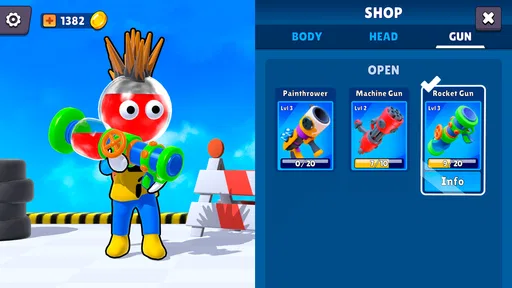
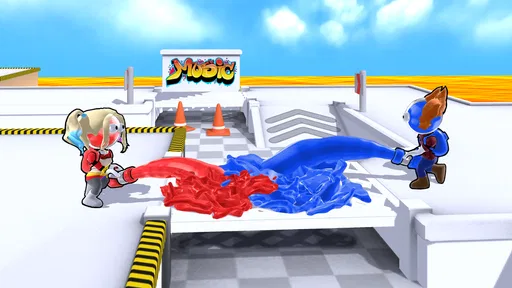
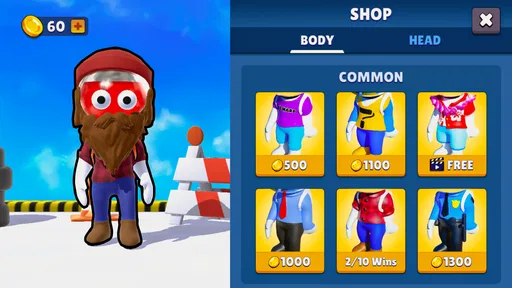
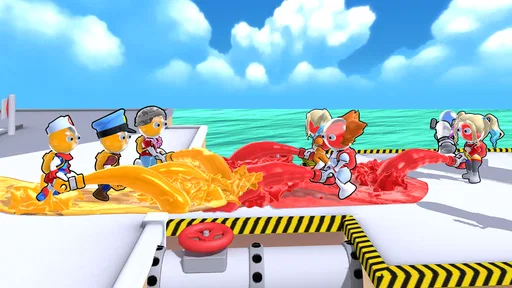
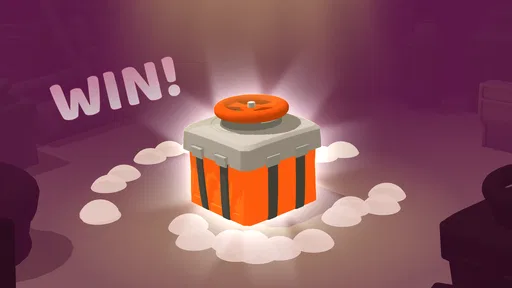
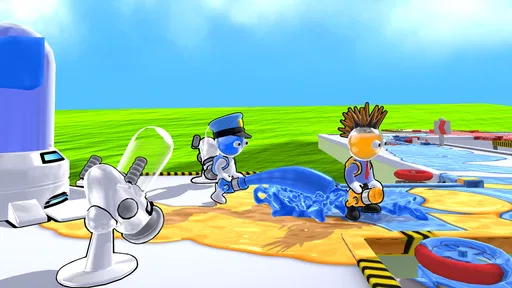
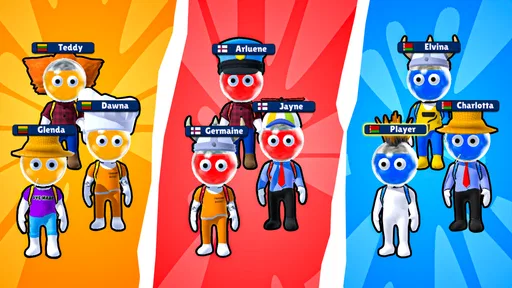
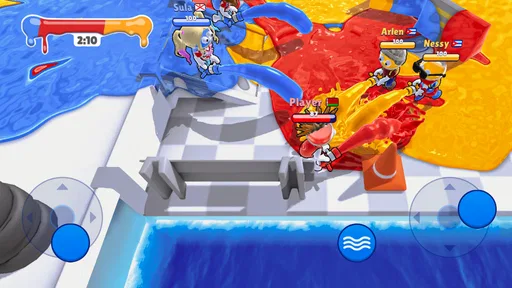
Our Review of Dye Hard - Color War
 Analysis by Appyee
I spent time with Dye Hard - Color War expecting a quick action game, and that is exactly where it fits best: short bursts of competitive color-covering that are easy to understand almost immediately. The basic idea is simple, but the pressure comes from trying to spread your team’s color while the opposing side is doing the same. It feels made for a spare minute rather than a long, story-heavy session, and that focus is one of its biggest strengths.
This is a free action game from CASUAL AZUR GAMES, available for Everyone and compatible with Android 6.0 or later. Its current version is 1.0.418, and the game has already passed 50 million installs. A 4.4 average from around 141 thousand ratings suggests that the straightforward format has found a large audience, although popularity alone does not guarantee that every player will enjoy the pace or the monetization.
How the color battles feel in everyday play
The first thing I noticed is how little explanation the concept needs. You are not learning a complicated control scheme or trying to remember a large collection of rules. The visual goal is immediately readable: your side wants more of the play area covered in its color. That makes it approachable for someone who normally avoids action games, while still leaving room for better timing and movement.
I found the strongest sessions happened when I treated each round as a small tactical problem instead of simply rushing forward. Covering space is satisfying, but blindly chasing territory can leave your position exposed. A better habit is to watch where the opposing color is spreading, decide whether to contest that area, and then move with a clear purpose. Even in a casual match, that choice gives the game more thought than its bright presentation initially suggests.
The format works particularly well during ordinary interruptions in the day. I could imagine playing while waiting for a bus, taking a short break between tasks, or handing the phone to someone who wants to try something without a tutorial lasting several minutes. The game’s immediate premise makes it easy to start, and the action-oriented design keeps the focus on what is happening on screen rather than on menus or long explanations.
That accessibility also explains why the Everyone rating makes sense. The presentation is colorful and competitive without requiring mature subject matter to understand the objective. Parents should still use their own judgement about screen time and purchases, but the game is positioned as a broadly accessible experience rather than one aimed at a narrow age group.
The useful difference between rushing and controlling space
My most useful adjustment was to stop measuring success by how quickly I could move. Fast movement can feel productive, yet the more important question is whether that movement improves my team’s position. If I repeatedly cross the same area without changing the balance, I am spending attention without creating much value. When I instead look for unclaimed or weakly defended sections, each action feels more meaningful.
This makes the game a better fit for players who enjoy light tactical decisions than for people who want pure reflex action. It is not demanding in the same way as a complex competitive multiplayer title, but it rewards awareness. I learned to glance at the whole field before committing, especially when the obvious target was not necessarily the most useful one.
Another practical tip is to avoid treating every opponent encounter as a personal duel. The larger color pattern matters more than winning every direct confrontation. Sometimes the smarter move is to secure another section and force the other side to react. That kind of decision is easy to miss when the screen is busy, and it is one reason I think the game has more replay value than the one-line premise suggests.
What the free entry point really means
The game is free to download, which removes the main barrier to trying it. That matters here because the appeal is highly personal: some players will enjoy the quick color conflict immediately, while others may find the repeated objective too narrow after a few sessions. Free access lets you make that decision without paying upfront for a style you might not keep using.
There are in-app purchases listed from $0.49 to $99.99 per item. I would therefore approach the game as a free experience first and consider any purchase separately, rather than assuming that spending is necessary to understand its value. The available price range is wide, so the sensible question is not simply whether the game costs nothing to install, but whether an optional purchase would genuinely improve your own routine with it.
That distinction is important for families and for anyone who prefers tightly controlled mobile spending. I would check purchase settings before letting a child play unsupervised, and I would avoid buying anything during a moment of frustration or excitement. The free starting point is a real advantage, but it does not automatically make every optional item good value for every player.
Because the game’s appeal comes from its core color battle, I would not recommend spending money before you know whether that central loop holds your attention. Play it free, decide whether you return to it naturally, and only then think about optional extras. That is the fairest way to judge value when the download itself costs nothing and individual purchases can reach a much higher amount.
Where the experience delivers value
The strongest value is convenience. Dye Hard - Color War gives me a game I can understand quickly, play in short sessions, and put down without needing to remember a complicated campaign. That makes it more useful than a larger action game when I only have a few minutes and do not want to commit to a long match or a detailed progression system.
It also delivers value through visual clarity. The team-color idea gives the action a clear purpose, and the contrast between sides helps me understand the state of a round at a glance. That is especially helpful on a small phone screen, where a crowded interface can make competitive action tiring. Here, the central objective remains easy to follow even when I am playing casually.
The game can also work as a low-pressure introduction to action games. Someone who is uncomfortable with complicated controls can begin with the straightforward goal of spreading a color and observing the opposition. From there, they can develop better habits around positioning and timing. I would not present it as a substitute for a deep strategy game, but it offers a gentle step toward thinking about territory and reaction.
Its large audience is another practical sign that the concept is easy to pick up. The game has around 3.5 thousand written reviews alongside its rating, giving prospective players more than a bare download count to consider. I still prefer personal testing over popularity, but the scale does suggest that the format is not difficult to access or understand.
The tradeoffs I noticed after the novelty settled
The same simplicity that makes the game welcoming can also become its main limitation. If you need a rich story, character development, elaborate objectives, or a wide variety of genres inside one app, this is unlikely to satisfy you. The color-war premise is focused, and focused games can feel repetitive when your preferred kind of progression is narrative rather than mechanical.
I also would not choose it as my first option for serious competitive play. The experience is better suited to casual action and quick decisions than to someone looking for a finely balanced esports-style environment. Players who enjoy studying complex systems, building long-term strategies, or comparing detailed statistics may find the game too light.
There is a mental tradeoff in the short-session design as well. Starting a quick round is easy, but that convenience can encourage playing repeatedly without a clear stopping point. I found it helpful to decide in advance whether I was playing one short break or continuing for longer. Without that boundary, a game designed for spare moments can quietly take over more time than intended.
The purchase structure is another reason to keep expectations realistic. The game is free to access, but the presence of items ranging from $0.49 to $99.99 means the cost of optional spending depends heavily on personal restraint and on what you choose to buy. I would not describe the game as an all-inclusive paid product; I would describe it as a free entry point with a broad range of in-app purchase prices.
Who will get the most from it
I think the best audience is someone who wants colorful action with an objective that can be understood in seconds. It suits players who enjoy moving around a shared space, reacting to an opposing team, and making small tactical choices without studying a large rulebook. It is also a reasonable choice for a family device where different people may want to try the same game without a long learning curve.
It is especially useful for short breaks. Imagine finishing a task at work and having only enough time for a compact distraction before the next appointment. A story-driven adventure would be awkward in that situation, while this game lets you focus on a clear color-based contest and stop when your break ends. That everyday use case is where I see its value most clearly.
Players who enjoy experimenting can get more from it by changing their approach between rounds. Try prioritizing open territory in one session, then focus on reacting to the opposing color in the next. Even without turning the game into a serious strategy exercise, this prevents every round from feeling like the same automatic rush.
I would skip it if your main reason for downloading an action game is a deep campaign or a large collection of distinct modes. I would also look elsewhere if you dislike free-to-play purchase prompts in principle, even when the initial download is free. In that case, a paid game with a clearly defined upfront price may be more comfortable and easier to budget.
How it compares with familiar alternatives
Compared with a traditional arcade action game, this one places more emphasis on territory and team color than on defeating a sequence of individual enemies. That gives the player a broader objective: the question is not only what is directly in front of me, but how my movement affects the overall balance of the field.
Compared with a deep strategy game, however, it is much faster to learn and much lighter in commitment. There is no need to spend a long session planning a build or managing a complex economy before seeing the result of a decision. That makes it more approachable, but it also means players seeking extensive long-term planning may prefer a more specialized alternative.
Compared with a premium action title, the free download is convenient, but the purchase model requires more awareness. A single upfront purchase can be easier for some people to evaluate, while this game lets you try the central experience without paying first. Neither approach is automatically better; the right choice depends on whether you value low-risk testing or predictable total cost.
For me, its clearest identity is as a casual color-control action game. It is not trying to replace every other genre. Its value comes from doing one accessible thing quickly, with enough movement and opposition to make a short session feel active rather than passive.
My practical approach to getting started
I recommend beginning without making any purchase. Use the first sessions to decide whether the color-spreading objective remains enjoyable after the initial novelty. Pay attention to whether you are making deliberate choices or simply repeating the same route, because that difference will tell you more about long-term fit than the bright presentation does.
Next, set a simple session boundary. One round during a break is a sensible test, while a longer session can show whether the game continues to feel engaging. If you are sharing the device with a child, review the purchase controls before handing it over and explain that free installation does not mean every optional item is free.
Finally, play with awareness of the whole field. Do not automatically chase the nearest opponent or repaint the same patch again and again. Look for a move that changes the balance, even if it is less dramatic. That small shift in mindset made the game feel more tactical and helped me get more from the same basic premise.
My verdict on whether it is worth your time
I recommend Dye Hard - Color War to anyone who wants a free, approachable action game for short sessions and enjoys the satisfaction of covering space for a team. The concept is clear, the age rating is broad, and the large install base reflects how easily the game can attract casual players. I also like that it offers a little more decision-making than the simple color premise might suggest.
My recommendation is more cautious for players who want depth, a story, or a fixed-cost experience. The focused loop may become repetitive, and the in-app purchase range means you should treat optional spending carefully. The best value comes from enjoying the free core rather than assuming that buying something is required.
In the end, I would download it as a low-risk trial, play several short sessions, and make the buy-or-skip decision based on whether I genuinely return to it. The free entry point is the strongest reason to try it; disciplined spending is the key to keeping its value. If quick color-based action sounds appealing, it is an easy recommendation. If you are searching for a substantial long-form game, I would skip it and choose a deeper alternative instead.
Verdict
Strengths of Dye Hard - Color War
- Fast-paced matches are easy to start and fit well into short play sessions.
- Simple controls make the game accessible to newcomers.
- Color-based objectives create clear, easy-to-understand gameplay.
- Different arenas can keep matches feeling varied over time.
- Competitive multiplayer adds replay value for players who enjoy challenges.
Limitations of Dye Hard - Color War
- Matchmaking quality may depend heavily on the number of active players.
- Bright visual effects can make busy battles harder to follow.
- Progression may feel repetitive after extended play sessions.
- Online play can be frustrating when teammates do not cooperate.
- Battery usage may increase during longer multiplayer sessions.
Other Releases by CASUAL AZUR GAMES
View All
Worms Zone .io - Hungry Snake
Action4.3

Stack Ball - Crash Platforms
Arcade4.5

STAR: Super Tricky Amazing Run
Arcade4.2

State.io — Conquer the World
Strategy4.1
Similar Picks in This Category
View All
Temple Run 2: Endless Escape
Imangi Studios4.1

PUBG MOBILE
Level Infinite4.3

Free Fire: 9th Anniversary
GARENA INTERNATIONAL I4.4

Talking Tom: Hero Dash Run
Outfit7 Limited4.3

slither.io
Lowtech Studios3.9

Sniper 3D:Gun Shooting Games
Wildlife Studios4.6
Frequently Asked Questions
What is Dye Hard - Color War and how does the gameplay work?
Dye Hard - Color War is a fast-paced multiplayer action game in which teams compete to cover the arena with their color while battling opponents. You move around the map, spray or launch paint, capture areas, and try to finish with more territory than the rival team. Matches are designed to be quick, colorful, and easy to understand, although winning requires movement, timing, and teamwork.
Can I play Dye Hard - Color War without an internet connection?
Dye Hard - Color War is primarily designed around online multiplayer battles, so an internet connection is generally required for its main competitive experience. Offline availability may be limited or unavailable depending on the version installed and the features currently offered by the developer. Before downloading, players should also expect that connection quality can affect matchmaking, loading times, and overall gameplay performance.
Is Dye Hard - Color War free to download and play?
The game can generally be downloaded and played without an upfront purchase, but it may include optional in-app purchases. These purchases can be used for cosmetic items, upgrades, rewards, or other progression-related content, depending on the current version. Players who prefer not to spend money should review the store listing and device purchase settings, especially if children will be using the app.
Is Dye Hard - Color War suitable for children?
Dye Hard - Color War uses bright cartoon-style visuals and paint-based combat rather than realistic violence, which may make it more approachable for younger players. However, it can still include online interactions, advertisements, competitive pressure, and optional purchases. Parents should check the official age rating, review privacy permissions, and enable parental controls before allowing children to play without supervision.
What devices are needed to run Dye Hard - Color War smoothly?
The exact requirements depend on whether you use the Android or iOS version, as well as the game update installed on your device. A relatively recent phone or tablet with a supported operating-system version should provide the best experience. Older devices may experience slower loading, reduced frame rates, or overheating during matches, so checking the current store requirements and keeping free storage available is recommended.
Play our best games!


